

India’s Tool Sector: A New Frontier in Global Manufacturing
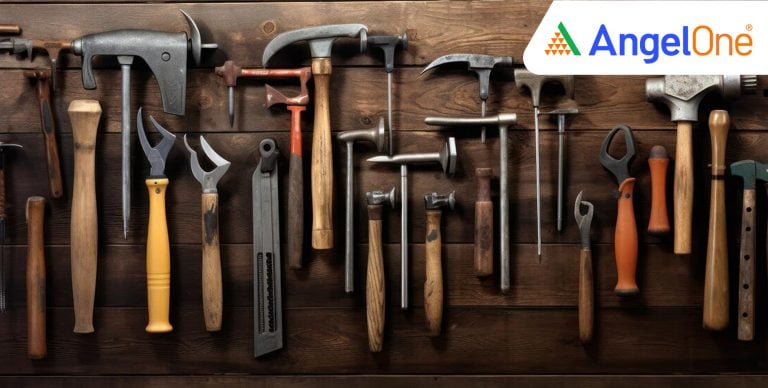

The hand and power tools industry serves as a critical backbone of global manufacturing, supporting essential sectors like construction, automotive, electronics, and infrastructure. In April 2025, NITI Aayog, in collaboration with the Foundation for Economic Development, released “Unlocking $25+ Billion Exports: India’s Hand & Power Tools Sector.” This report outlines a strategic plan to scale India’s tool exports from the current $1 billion to more than $25 billion by 2035.
While India’s current presence in the global tools export market remains relatively small, the country holds several competitive advantages—cost-effective labour, favourable trade access, and a steadily expanding manufacturing base. These strengths position India to emerge as a serious contender in the global tools supply chain.
Snapshot of India’s Export Landscape
Hand Tools
India’s hand tools industry is rooted in a well-developed MSME network, with prominent production hubs in states like Punjab (Jalandhar, Ludhiana), Maharashtra (Mumbai, Nagpur), and Rajasthan (Nagaur). Core exports include pliers, wrenches, screwdrivers, and hand saws. The sector’s resilience is driven by labour-centric manufacturing, strong local supply chains, and historical development since Independence.
Power Tools
In contrast, India’s power tools segment is still developing, hampered by the absence of a robust electronics manufacturing ecosystem needed for producing key components like motors and batteries.
The United States and the European Union together account for 55–60% of global tool imports, representing a significant opportunity for India to expand its market share.
Also Read: These Stocks to Benefit From India’s Growing Retail: Trent, V2 Retail and More
Conclusion
India is at a critical point in its journey toward industrial expansion. Although the tools sector is not yet a major player in global trade, it holds substantial promise. The NITI Aayog roadmap calls for a focused push to harness India’s unique strengths—an expanding manufacturing base, skilled labor pool, and supply chain integration—while tackling key structural gaps.
Disclaimer: This blog has been written exclusively for educational purposes. The securities mentioned are only examples and not recommendations. This does not constitute a personal recommendation/investment advice. It does not aim to influence any individual or entity to make investment decisions. Recipients should conduct their own research and assessments to form an independent opinion about investment decisions.
Published on: Apr 23, 2025, 1:47 PM IST

Sachin Gupta
Sachin Gupta is a Content Writer with 6+ years of experience in the stock market, including global markets like the US, Canada, and Australia. At Angel One, Sachin specialises in creating financial content that simplifies complex market trends. Sachin holds a Master's in Commerce, specialising in Economics.
Know More
- India Notifies New Telecom Sandbox Rules to Support Technology Testing
- India and Poland to Expand Defence, Space and Technology Cooperation, Double Trade by 2030
- India Post Reports 25% Revenue Growth to ₹4,202 Crore in Q2 FY27
- Indian Railways Reports 77.11% Punctuality in FY27, Compared with 73.62% in FY24
- Central Government Yet to Announce 3% DA Hike for 1.2 Crore Employees and Pensioners
Related Articles



Enjoy ₹0 Account Opening Charges
Get the link to download the App


