
Modi Flags Off New Amrit Bharat Trains to Boost Connectivity
 EN
EN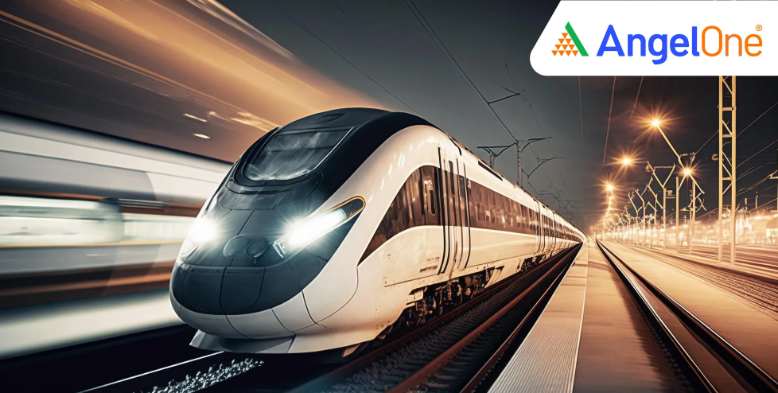

Prime Minister Narendra Modi virtually flagged off four new Amrit Bharat Express trains connecting New Jalpaiguri with Nagercoil and Tiruchirappalli, and Alipurduar with SMVT Bengaluru and Mumbai-Panvel.
The Amrit Bharat Express operates on a push-pull configuration with locomotives at both ends, enabling faster acceleration and braking. The trains can run at speeds of up to 130 kmph, offering quicker and smoother long-distance travel.
The Prime Minister’s Office stated that the services would strengthen affordable and reliable connectivity for students, migrant workers, traders, and common citizens while improving inter-state economic and social linkages.
Affordable Travel for the Common Passenger
Since its launch in December 2023, 30 Amrit Bharat Express trains have become operational, and nine additional services are being introduced to widen nationwide coverage.
The fare structure is designed to remain accessible, with non-AC sleeper travel priced at around ₹500 per 1,000 kilometres and no dynamic pricing. The transparent pricing model ensures that passengers are protected from seasonal fare hikes, making the service especially useful for workers and families who depend on budget travel.
Railways as a Lifeline
Indian Railways has historically connected people, markets, and opportunities across vast distances. For millions, train travel is not a luxury but a necessity. The Amrit Bharat Express reflects this reality by extending better facilities to the non-AC segment, which carries the majority of passengers. The initiative focuses on safety, reliability, and a passenger-centric approach, bringing modern features to ordinary travellers.
Design and Purpose of Amrit Bharat
The Amrit Bharat Express is a fully non-AC long-distance sleeper service built to handle heavy passenger volumes during festive seasons and migration peaks.
Each train is configured with 11 General Class coaches, eight Sleeper Class coaches, one Pantry Car, and two Second Class–cum–Luggage–cum–Guard Vans with disabled-friendly compartments.
The service is aimed at supporting travel for employment, education, medical needs, and family commitments, particularly for regions with limited affordable options.
Key New Routes
Several new routes are strengthening national integration. The Kamakhya–Rohtak service connects Assam with Haryana, passing through West Bengal, Bihar, Uttar Pradesh, and Delhi, improving access to spiritual and commercial centres. The Dibrugarh–Lucknow train links frontier regions of the Northeast with northern India, passing close to Kaziranga, Ayodhya, and Lucknow, and is expected to boost tourism and local trade.
The New Jalpaiguri–Nagercoil and New Jalpaiguri–Tiruchirappalli services create long corridors from the eastern Himalayan foothills to Tamil Nadu, connecting ports, industrial belts, and education hubs. The Alipurduar–Bengaluru and Alipurduar–Panvel trains provide direct links between North Bengal’s border districts and major economic centres in the south and west, helping migrant workers and small businesses.
The Santragachi–Tambaram service strengthens east–south connectivity through Odisha and Andhra Pradesh, while the Howrah–Anand Vihar train improves access between eastern India and the National Capital Region. The Sealdah–Banaras daily service links major pilgrimage destinations, supporting religious tourism and local economies.
Broader Economic Impact
Enhanced rail access is expected to support employment mobility, tourism, trade, and access to education and healthcare. By linking border areas, major cities, and pilgrimage centres, the network promotes balanced regional development. Local businesses, hospitality services, and small traders are likely to benefit from greater passenger movement.
Also Read: Quant Mid Cap Fund Makes Full Exit from IRCTC Stake!
Conclusion
The expansion of the Amrit Bharat Express marks a significant shift toward inclusive rail growth. With affordable fares, modern design, and wide geographic reach, the service is becoming a backbone for long-distance travel among ordinary citizens. As more routes are added, the initiative will continue to connect regions, opportunities, and aspirations across India.
Disclaimer: This blog has been written exclusively for educational purposes. The securities mentioned are only examples and not recommendations. This does not constitute a private recommendation/investment advice. It does not aim to influence any individual or entity to make investment decisions. Recipients should conduct their own research and assessments to form an independent opinion about investment decisions.
Published on: Jan 19, 2026, 1:07 PM IST

Nikitha Devi
Nikitha is a content creator with 7+ years of experience in the financial domain. Specialising in personal finance, investments, and market insights, Nikitha simplifies complex financial topics, making them accessible to readers.
Know More
- Indian Railways Freight Loading Grows 6.14% in September 2026
- Delhi EV Push: CM Rekha Gupta Unveils 150 E-Buses and Charging Stations
- India's Retail Inflation Hits 23-Month High of 5.54% in September 2026
- UPI MDR Charges on Select Merchant Payments Deferred Until After Diwali, Says NPCI
- RBI Expands Forex Risk Reserve Rules, Restricts Rupee Derivatives
Related Articles



Enjoy ₹0 Account Opening Charges
Get the link to download the App


