When Will India VIX Cool Off? A Guide from Past General Elections


Exploring the Heartbeat of India’s Markets: Riding the Waves of India VIX and FPI Outflows
Hey there, fellow market enthusiasts! Over the past couple of weeks, it’s been quite a rollercoaster ride in the Indian markets, hasn’t it? We’ve had our eyes glued to two major players in the scene: volatility and those elusive Foreign Portfolio Investors (FPIs). And let me tell you, understanding their dance is like deciphering the pulse of our market journey, influencing how we shape our wealth-building strategies for the long haul.
Unraveling the Mysteries of India VIX: A Story of Elections and Market Vibes
Now, let’s talk about volatility – that wild ride measured by the India VIX. It’s been shooting up, hitting a nerve with investors and market watchers alike. But here’s the thing: history has a way of repeating itself, especially when it comes to elections. Take a trip down memory lane to 2009 and 2014, and you’ll see what I mean.
Back in 2009, as the election buzz started heating up from March onwards, the India VIX decided to tag along for the ride. It soared from its cozy lows of around 12.5 to a whopping 39 levels. Can you imagine the frenzy? But just when things seemed uncertain, and everyone was holding their breath, the dust settled post-election, and volatility took a chill pill.
Fast forward to 2014, and we’re seeing déjà vu. The India VIX started its ascent in February, inching up from the comfortable 12 mark to around 30. Once again, post-election euphoria kicked in, and volatility decided to take a breather, giving investors a chance to exhale.
Chart: Let’s Visualize the Rollercoaster Ride of India VIX in Election Years
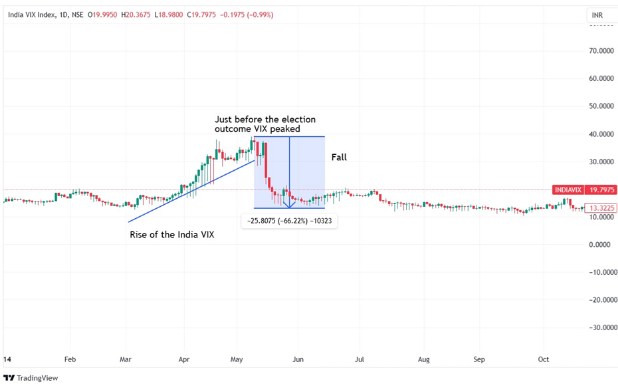
The above chart help us understand the Rise and Fall of India VIX in 2009 General Election Scenario
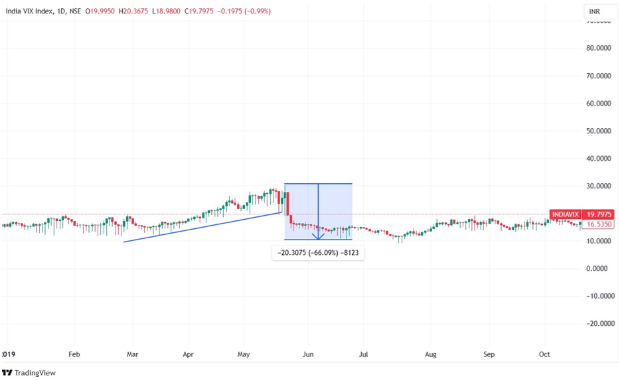
The above chart help us understand the Rise and Fall of India VIX in 2014 General Election Scenario
And guess what? We might be in for a similar thrill ride this time around. It’s likely the same trend would continue, a cooling-off period for the India VIX come early June, echoing sentiments from none other than Union Home Minister Amit Shah himself.
FPI Flows: Riding the Waves of Investment Trends
Now, let’s talk about those mysterious FPIs. They’ve been playing a game of hide-and-seek with us this year. Portfolio investment flows? Well, they’ve taken a dip into the negative territory for CY24, leaving us scratching our heads. While some sectors, like financials, have seen a bit of a sell-off, others, like PSU banks, have had their moment in the sun with some buying action.
Looking Ahead: Riding Out the Storm for Brighter Days
So, what’s the takeaway from all this excitement? Brace yourselves, because short-term volatility might just be here to stay, especially until we get some clarity post-election. But fear not, my fellow investors! Beyond the storm clouds, there lies the promise of clearer skies and brighter days ahead. As we navigate through the twists and turns of the market, let’s keep our eyes on the prize: long-term wealth creation.
So, here’s to staying informed, staying resilient, and most importantly, staying human in the face of market madness. After all, it’s not just about the numbers – it’s about the stories behind them, the lessons we learn, and the journey we share together.
Disclaimer: This blog has been written exclusively for educational purposes. The securities mentioned are only examples and not recommendations. It is based on several secondary sources on the internet and is subject to changes. Please consult an expert before making related decisions.
Published on: May 21, 2024, 11:15 AM IST

- Temasek Backs Singapore Airlines Long-Term Investment in Air India Amid Funding Questions
- SEBI Reviews SME IPO Rules, Proposes Bigger Institutional Role and Stricter Listing Norms
- Top Gainers and Losers on August 28, 2026: TCS, TechM and Infosys Rise Up to 4%
- RITES Share Price in Focus; Opens Branch Office in South Africa
- Top Gainers and Losers on August 27, 2026: Hindalco, HDFC Bank and Mahindra & Mahindra Fall Over 2%
Related Articles

Enjoy ₹0 Account Opening Charges
Get the link to download the App