Oil markets brace for OPEC+ decision amidst global economic headwinds


In a week marked by cautious optimism, the oil market navigates uncertainties, balancing on the precipice of OPEC+ decisions and global economic challenges. The latest Weekly Petroleum Status Report, coupled with geopolitical events, sets the stage for a nuanced analysis of the energy landscape.
Current Week Overview: November 24, 2023
Production and Refinery Activity
The U.S. crude oil refinery inputs witnessed a notable uptick, averaging 16.0 million barrels per day, reflecting a 518 thousand barrels per day increase from the previous week. Refineries operated at 89.8% capacity, indicating a robust operational stance. Gasoline production, however, experienced a dip, averaging 9.3 million barrels per day, while distillate fuel production saw an increase, reaching 5.0 million barrels per day.
Import Dynamics and Inventories
Crude oil imports decreased to 5.8 million barrels per day, aligning with a broader trend observed over the past four weeks. Commercial crude oil inventories increased by 1.6 million barrels, positioning at 449.7 million barrels—slightly above the five-year average. Motor gasoline and distillate fuel inventories depicted mixed trends, with gasoline inventories increasing by 1.8 million barrels and distillate fuel inventories surging by 5.2 million barrels.
Price Movements and Global Context
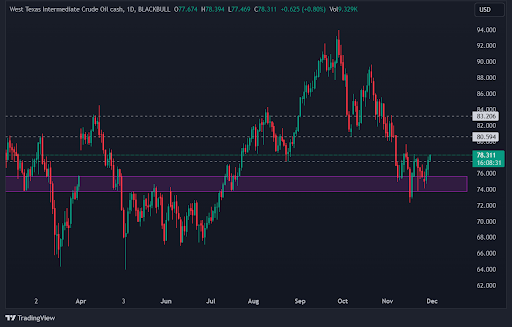
The West Texas Intermediate crude oil price closed at $74.83 per barrel, reflecting a slight decrease from the previous week. Meanwhile, global economic headwinds, notably exemplified by weaker-than-expected Chinese factory data, added a layer of complexity to market dynamics.
Trends Over the Past Weeks
Refinery Throughput and Production
Comparing the current week’s data with the preceding three weeks reveals a consistent upward trend in U.S. crude oil refinery inputs. This points to a sustained effort to meet demand, underlining the industry’s resilience amid evolving market conditions. Gasoline production, however, displayed volatility, emphasizing the influence of dynamic factors on refining strategies.
Import Dynamics and Inventory Trends
The four-week average of crude oil imports, standing at about 6.3 million barrels per day, indicates a marginal increase compared to the same period last year. Commercial crude oil inventories, while experiencing fluctuations, have generally remained close to or slightly below the five-year average.
Price Movements and Global Factors
The West Texas Intermediate crude oil price witnessed fluctuations, responding to a confluence of factors, including OPEC+ deliberations and geopolitical events. The global economic scenario, as reflected in Chinese factory data, underscores the interconnectedness of oil markets with broader economic trends.
Market Sentiment and OPEC+ Dynamics
As OPEC+ members convene for a pivotal policy meeting on November 30, market participants are diligently tracking the possibility of production cuts. Presently, both WTI and Brent Crude have secured support in the market. However, the prevailing uncertainty surrounding the meeting, coupled with unfolding geopolitical developments, has fostered an environment where even bearish news encounters resistance in significantly influencing market sentiment.
Key Considerations
- Resolution of Disagreements: The unresolved disagreement over production targets for Angolan and Nigerian members introduces an element of uncertainty. Resolving these issues could impact future production dynamics.
- Global Economic Indicators: Beyond the OPEC+ meeting, keeping an eye on global economic indicators, especially from major consumers like China, will be crucial in gauging future oil demand. China’s manufacturing activity contracted for a second straight month in November and at a quicker pace than expected suggesting more policy support measures are needed to help shore up economic growth in the world’s largest oil importer.
- Geopolitical Developments: Geopolitical tensions and events in oil-producing regions can swiftly alter market dynamics. Staying informed on these developments is essential for a comprehensive analysis.
Conclusion
As oil markets tread cautiously, the coming weeks promise a dynamic interplay of geopolitical forces, economic signals, and OPEC+ decisions. The industry’s resilience, reflected in refinery activities and strategic inventory management, provides a buffer against external pressures. Observers and investors alike must stay vigilant, ready to adapt to a landscape where each data point holds significance.
Disclaimer: This blog has been written exclusively for educational purposes. The securities mentioned are only examples and not recommendations. It is based on several secondary sources on the internet and is subject to changes. Please consult an expert before making related decisions
Published on: Nov 30, 2023, 1:32 PM IST

- US Commerce Department Finalises High Tariffs on Solar Imports from India, Indonesia and Laos
- Argentina Commits to Easing Entry Barriers for Indian Pharma Sector
- US Senate Passes Bill to Sanction Major Russian Oil Buyers; India, China at Risk of 100% Tariffs
- Russia Extends Diesel and Gasoline Export Ban Until January 2027
- Japan Trade Deficit Widens in June as Oil Imports Rise and Weak Yen Impacts Trade
Related Articles

Enjoy ₹0 Account Opening Charges
Get the link to download the App