China Slashes Key Mortgage Rate To Fuel Growth


China’s economy is facing a multi-faceted challenge, with a sluggish property sector, soaring youth unemployment, and a global economic slowdown weighing heavily. To combat these issues and stimulate growth, China’s central bank recently took a significant step by cutting the key benchmark lending rate used to price mortgages.
The Background
China has been grappling with a prolonged property sector downturn, exacerbated by the global economic slowdown and rising youth unemployment. These factors have dampened demand for goods from the world’s second-largest economy and slowed down growth.
The Key Move
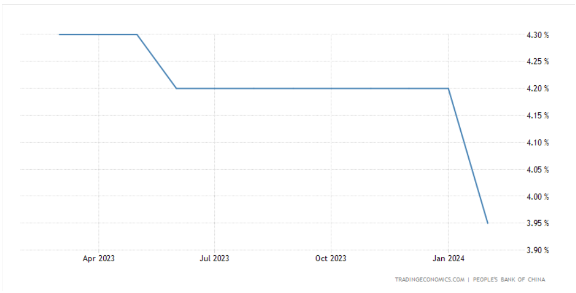
In a bid to boost growth and rescue the housing market, the People’s Bank of China announced a cut in the five-year loan prime rate (LPR) from 4.2% to 3.95%. This is the first cut since June and the largest since the rate was introduced in 2019.
5-Year LPR (China)
The Impact and Significance
The rate cut is aimed at encouraging commercial banks to offer more credit at better rates, which could stimulate borrowing and spending. It comes at a time when most major economies are raising rates to curb inflation, highlighting China’s unique economic challenges.
The Larger Economic Context
China’s economy recorded one of its worst annual growth rates in 2023 since 1990, and deflationary pressures have been mounting. Consumer prices fell sharply in January, prompting the government to take more aggressive measures to revive the economy.
The Real Estate Crisis
At the heart of China’s economic woes is the real estate crisis, with major firms like Evergrande and Country Garden facing financial troubles. This has led to buyer mistrust, unfinished housing developments, and falling prices, severely impacting consumer confidence and spending.
Government Measures and Future Outlook
To combat deflation and boost economic activity, policymakers have announced various measures, including infrastructure spending and consumption-boosting initiatives. These efforts, including interest rate cuts and reserve requirement ratio reductions, aim to stimulate lending and spending.
Bright Spots Amidst the Challenges
Despite the economic challenges, there have been some positive signs, such as a rebound in consumption during the recent Chinese New Year holidays, exceeding pre-pandemic levels. This indicates a potential for recovery, albeit gradual.
Looking Ahead
With the economy still facing headwinds, more rate cuts and supportive measures are expected in the future to bolster growth and stabilise the housing market.
In conclusion, China’s recent rate cut reflects a bold move by the central bank to address the country’s economic challenges and revive the housing market. While the road to recovery may be challenging, the government’s proactive measures signal a commitment to stimulating growth and restoring stability.
Disclaimer: This blog has been written exclusively for educational purposes. The securities mentioned are only examples and not recommendations. It is based on several secondary sources on the internet and is subject to changes. Please consult an expert before making related decisions.
Published on: Feb 20, 2024, 11:52 AM IST

- US Commerce Department Finalises High Tariffs on Solar Imports from India, Indonesia and Laos
- Argentina Commits to Easing Entry Barriers for Indian Pharma Sector
- US Senate Passes Bill to Sanction Major Russian Oil Buyers; India, China at Risk of 100% Tariffs
- Russia Extends Diesel and Gasoline Export Ban Until January 2027
- Japan Trade Deficit Widens in June as Oil Imports Rise and Weak Yen Impacts Trade
Related Articles

Enjoy ₹0 Account Opening Charges
Get the link to download the App