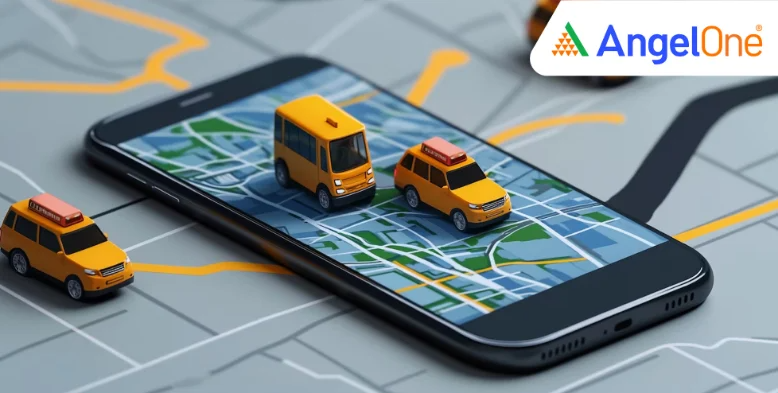



Uber is expanding its India business to include organised transportation for corporate employees, as per news reports.
The company estimates that this segment could reach $13 billion by 2030. The focus is on daily office commutes rather than individual, on-demand trips.
India has seen an increase in global capability centres, IT parks, factories and large office campuses. These workplaces depend on fixed, scheduled transport for employees.
Such demand differs from consumer ride-hailing as travel patterns are repetitive and concentrated around specific locations and time slots.
According to Nikolaas Van de Loock, Uber began studying large employee commute patterns nearly 10 years ago, initially testing similar models outside India.
The company later prioritised India due to traffic density and the size of its working population. Product development has been handled by local engineering teams.
Uber has launched Employee Transportation Services (ETS) in Mumbai, Pune and Chennai. The service provides fixed-route, fixed-time transport for corporate clients and operates separately from Uber’s consumer ride-hailing platform.
The company plans to expand ETS to other tier-1 cities with high concentrations of IT firms, BPOs and GCCs, and later to tier-2 cities.
ETS uses a dedicated fleet rather than vehicles from the consumer marketplace. Drivers are contracted on fixed-distance or time-based packages.
The fleet currently includes 4- and 6-seater vehicles, with both petrol and electric options. Uber has said it intends to add 19-seater tempo travellers as demand increases.
Corporate clients are charged on a per-trip basis. Companies can choose passenger utilisation levels based on cost and employee convenience. Routes are created using employee residential data and work schedules to limit detours and reduce travel time.
The route-matching system is based on technology developed for Uber’s Shuttle service. During off-peak hours, vehicles may be deployed on Uber’s consumer platform, depending on agreements with corporate clients, to avoid idle capacity.
The employee transport service forms part of Uber’s business-focused expansion in India. This includes Uber Direct, a logistics service launched in partnership with the Open Network for Digital Commerce, aimed at last-mile deliveries.
Read More: India’s 2025 Uber Trends: Delhi Leads in Volume, Mumbai Prefers Late-Night Travel!
Uber’s entry into corporate transportation shows the growing role of organised commuting services in India’s expanding office and industrial hubs.
Disclaimer: This blog has been written exclusively for educational purposes. The securities mentioned are only examples and not recommendations. This does not constitute a personal recommendation/investment advice. It does not aim to influence any individual or entity to make investment decisions. Recipients should conduct their own research and assessments to form an independent opinion about investment decisions.
Investments in the securities market are subject to market risks, read all the related documents carefully before investing.
Published on: Jan 12, 2026, 11:58 AM IST

Team Angel One
We're Live on WhatsApp! Join our channel for market insights & updates

Get the link to download the App





 EN
EN