
Indian Railways Progresses on Renewable Energy Adoption with 812 MW Solar and 93 MW Wind Power
 EN
EN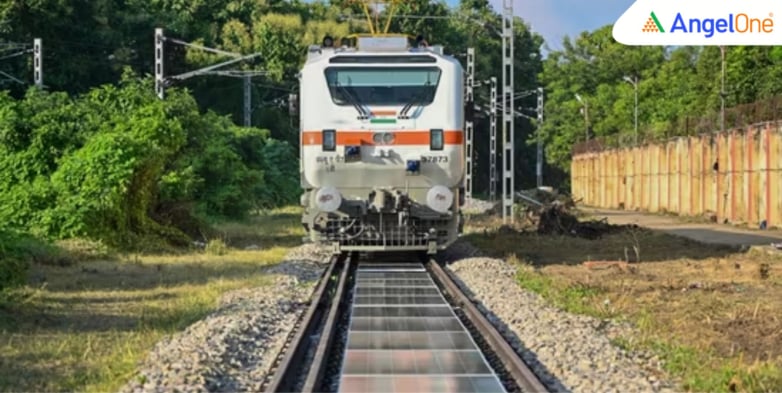

Indian Railways has significantly boosted its renewable energy capacity by commissioning 812 MW of solar and 93 MW of wind power till November 2025.
These projects are aimed at meeting traction needs, in line with the organisation’s target to become a Net Zero Carbon Emitter by 2030.
Key Achievements in Renewable Traction Power
As part of its eco-conscious initiative, Indian Railways has shifted focus to power its operations using clean energy sources. Till November 2025, 812 MW of solar power and 93 MW of wind energy installations have been utilised for railway traction requirements.
Additionally, a 100 MW renewable energy flow under the Round the Clock (RTC) mode has commenced via the Solar Energy Corporation of India (SECI).
Indian Railways has also tied up 1,500 MW of additional RTC renewable capacity, combining solar, wind, and storage solutions. This hybrid model aids in ensuring a steady, all-day renewable power supply for railway traction, reducing dependence on fossil fuels.
Electrification and Modern Locomotives
Electrification of the rail network continues in mission mode. Presently, 99.2% of the Broad Gauge network has been electrified. A comparison shows network electrification was 21,801 km before 2014 and rose to 46,900 km between 2014 and 2025. This represents over double the electrified routes within 11 years.
New locomotives using IGBT-based three-phase technology with regenerative braking have been introduced. These help recover part of the energy during braking, leading to improved energy utilisation.
Read More: Indian Railways Set to Launch Its First Hydrogen-Powered Train!
Expenditure and Alternative Energy Initiatives
In fiscal year 2023–24, Indian Railways spent ₹29,614 crore on traction, covering different power sources. Alongside solar and wind, a hydrogen-powered train trial has been initiated. Developed as per the RDSO specifications, this train reflects a shift towards alternative propulsion technologies for rail travel.
Coal-based steam engines now operate only on heritage routes like UNESCO-recognised mountain railways, seasonal trains, and chartered journeys, preserving their historical significance.
Conclusion
Indian Railways’ adoption of renewable energy is expanding with 812 MW solar and 93 MW wind capacity already operational. Supported by further 1,600 MW of hybrid power, this move aligns with the target of achieving carbon neutrality by 2030 while reducing reliance on fossil fuels.
Disclaimer: This blog has been written exclusively for educational purposes. The securities or companies mentioned are only examples and not recommendations. This does not constitute a personal recommendation or investment advice. It does not aim to influence any individual or entity to make investment decisions. Recipients should conduct their own research and assessments to form an independent opinion about investment decisions.
Investments in the securities market are subject to market risks, read all the related documents carefully before investing.
Published on: Dec 12, 2025, 12:11 PM IST

Team Angel One

- Bank Holidays in Uttar Pradesh and Kerala for Mahanavami on October 19, 2026
- Delhi Lok Adalat Announces Traffic Challan Settlement Date on October 25, 2026
- India and Canada Sign Commercial Agreements as Trade Talks Continue
- Bank Credit Grows 19.38% to ₹230 Trillion by September 2026 End
- Delhi’s SUNIYO 2.0 Property Tax Waiver Deadline Extended to December 31, 2026
Related Articles



Enjoy ₹0 Account Opening Charges
Get the link to download the App


