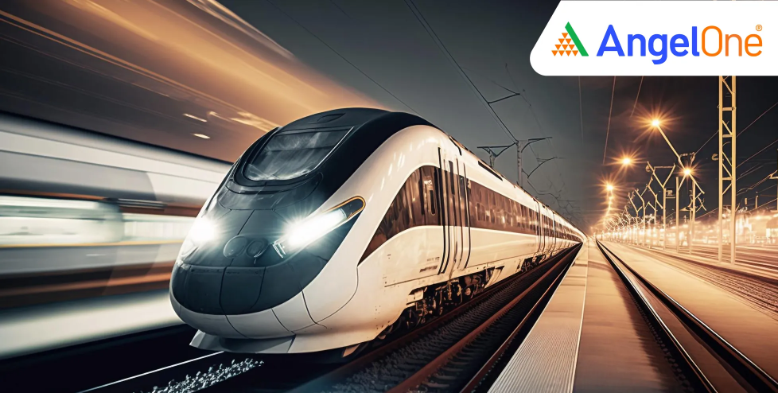



As per The Economic Times report, the cost of India’s first high-speed rail project between Mumbai and Ahmedabad has risen significantly due to delays in land acquisition.
The Indian Railways now plans to cover the increased expenditure mainly through government budgetary support while continuing construction through the designated project agency.
The estimated cost of the Mumbai-Ahmedabad High Speed Rail (MAHSR) corridor has climbed from ₹1.08 lakh crore to nearly ₹1.98 lakh crore, reflecting a surge of around 83%. To manage this escalation, Indian Railways intends to rely primarily on gross budgetary support from the central government instead of seeking fresh international borrowing.
Senior officials clarified the government’s position on external financing. "More external funding will not be needed for the Mumbai-Ahmedabad High Speed Rail (MAHSR) corridor," a senior official told ET.
In the Union Budget for FY27, ₹15,000 crore has been allocated as capital expenditure support for the National High Speed Rail Corporation Limited (NHSRCL), the special purpose vehicle responsible for executing bullet train projects.
This allocation is slightly lower than the ₹15,500 crore provided in the current financial year, but similar budgetary assistance is expected to continue until the project is completed. Railways may also approach the finance ministry for additional support if required.
Japan has been a key partner in the project, with the Japan International Cooperation Agency (JICA) extending soft loans worth ₹59,396 crore since 2017. The 508-km corridor is being developed with Japanese technology and financial cooperation.
Construction has progressed steadily, with foundation work completed at 8 of the 12 planned stations. The government has also announced that a 100-km section of the corridor is targeted to begin operations by 2027.
Alongside the Mumbai-Ahmedabad line, the government has outlined plans for seven additional high-speed rail corridors covering almost 4,000 km. These include routes such as Mumbai–Pune, Pune–Hyderabad, Hyderabad–Bengaluru, Hyderabad–Chennai, Chennai–Bengaluru, Delhi–Varanasi, and Varanasi–Siliguri.
Together, these proposed projects are expected to attract investments of nearly ₹16 lakh crore, marking a major expansion of India’s high-speed rail network.
Read More: Indian Railways UTS App to Shut from March 1, 2026: What Happens to Your R-Wallet Money?
The rising cost of the Mumbai–Ahmedabad high-speed rail project highlights the financial challenges of large infrastructure ventures. By relying mainly on government budgetary support rather than additional foreign loans, the Centre aims to ensure steady progress while maintaining financial control and continuing its broader plan to expand India’s bullet train network.
Disclaimer: This blog has been written exclusively for educational purposes. The securities mentioned are only examples and not recommendations. This does not constitute a personal recommendation/investment advice. It does not aim to influence any individual or entity to make investment decisions. Recipients should conduct their own research and assessments to form an independent opinion about investment decisions.
Investments in the securities market are subject to market risks, read all the related documents carefully before investing.
Published on: Mar 4, 2026, 1:53 PM IST

Team Angel One
We're Live on WhatsApp! Join our channel for market insights & updates

Get the link to download the App






 EN
EN